Product details description
Protecting critical infrastructure such as power plants, airports, nuclear
facilities, and communication hubs demands layered, multi-faceted security
strategies that incorporate physical, electronic, and procedural defenses. Among
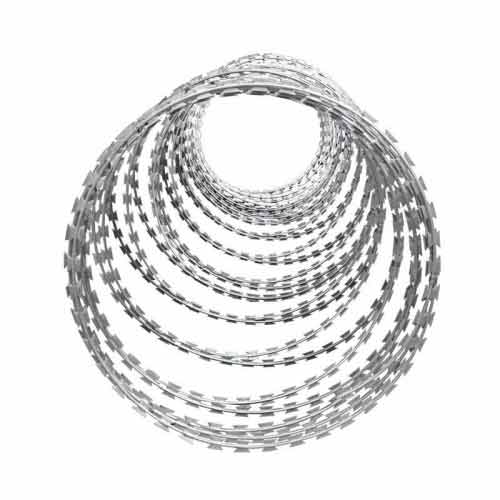
the most effective physical deterrents is razor wire—a high-intensity,
anti-climb barrier that serves as a formidable last line of defense against
unauthorized intrusion. Installed atop perimeter fences, walls, or gates, razor
wire’s sharp, serrated blades create an immediate and visceral psychological
barrier, compelling potential intruders to reconsider their actions before
attempting breach.
Razor wire is particularly suited for high-security environments due to its
ability to inflict serious injury upon contact, acting as both a physical
impediment and a strong visual warning. In power plants, where uninterrupted
operation is paramount, razor wire is often combined with sensor-equipped
fencing, surveillance cameras, and access control systems to form a
comprehensive security envelope. At airports, razor wire is deployed along
runways, cargo areas, and terminal perimeters to prevent sabotage, theft, or
terrorist incursions, often integrated with intrusion detection systems that
trigger alarms and alert security personnel in real time.
Installation and maintenance protocols for razor wire are stringent to
ensure maximum effectiveness and legal compliance. Anchoring systems must be
robust enough to withstand attempts at cutting or pulling down the wire,
typically involving heavy-duty brackets, tensioners, and reinforced posts.
Regular inspections are mandatory to check for sagging, damage from weather or
vandalism, and proper tensioning—loose or broken coils can create exploitable
gaps. Safety training for maintenance staff is essential, as handling razor wire
poses significant laceration risks; personal protective equipment (PPE)
including gloves, face shields, and cut-resistant clothing is required during
installation and repair.
Beyond its deterrent function, razor wire contributes to broader security
architecture by channeling intruders toward monitored zones or delaying their
progress long enough for response forces to intervene. Its presence also signals
a high level of preparedness to potential adversaries, serving as a strategic
psychological tool. While controversial due to its lethality, razor wire remains
a legally sanctioned and widely adopted component of critical infrastructure
protection worldwide, balancing humanitarian concerns with the imperative of
safeguarding national security, economic stability, and public safety.
Previous article:
What are the different types of razor wire?
Next article:
Razor Wire Types and Specifications: Flat Wrap, Concertina, and Mobile Barrier Designs